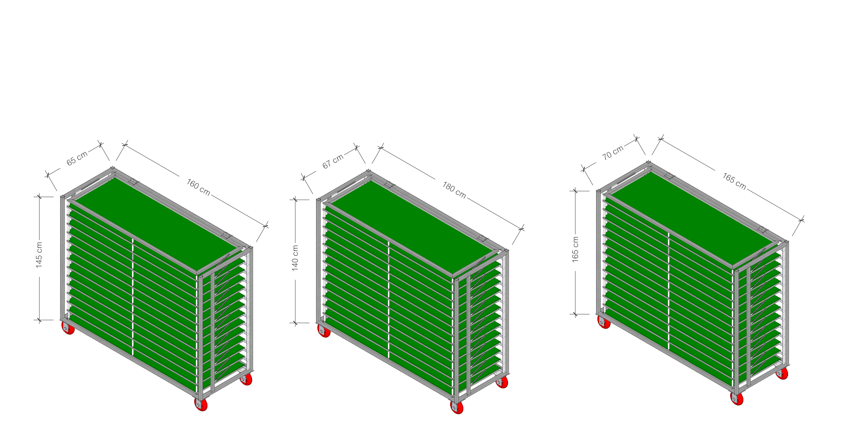
Cart Part Design & Engineering Development
Mechanical Design Engineer
2024
3 Months
projectDetail.industrialAutomation
projectDetail.theChallenge
Previous carts lacked standardization, causing storage inefficiencies and workflow delays. Structural instability posed safety risks, while poor design led to a high rate of part defects (scratches) during transport. High repair costs and frequent downtime were major pain points.
projectDetail.theSolution
Executed a complete engineering workflow: from conceptual design to 2D technical drawings in AutoCAD and 3D visualization in SketchUp 3D. The new design focuses on structural integrity, user ergonomics, and optimized material usage to ensure durability and safety.
projectDetail.transformationEvidence
projectDetail.systemDemo
projectDetail.systemArchitecture
Requirement
Design
Analysis
Fabrication
projectDetail.lessonsLearned
projectDetail.businessImpact
projects.detailHeading
Designed and developed a customized Cart Part System for production and maintenance use. The project covered the complete engineering workflow, starting from design concept, 2D technical drawing, 3D modeling, load calculation, material selection, and fabrication support, ensuring that the cart meets durability, safety, and ergonomic requirements for factory operations. [ Key Features ] - Full conceptual design based on user requirements. - 2D technical drawings with accurate dimensions and tolerances using AutoCAD. - 3D visualization for structure clarity and assembly understanding using SketchUp 3D. - Material selection based on load-bearing capacity and safety standards. - Weight and strength calculation for structural integrity. [ Impact & Improvements ] - Improved safety and stability through proper structure analysis. - Standardized cart size, improving workflow and storage efficiency. - Enhanced durability resulting in lifespan increased by 30 to 50 percent. - Reduced handling time by 20 to 40 percent. - Improved part protection resulting in 80 percent fewer scratches and defects. [ Cost Saving & Business Value ] - Reduced repair and replacement costs by 15,000 to 40,000 THB per year. - Optimized materials led to 10 to 20 percent lower fabrication cost. - Reduced downtime from damaged carts. - Improved workflow efficiency resulting in a 5 to 15 percent productivity gain.
projects.technologies
- AutoCAD
- SketchUp 3D
- Structural Analysis
- DFM
- Ergonomics
projects.systemGallery
projectDetail.nextProject
Line Stop Monitoring System
Mitsubishi PLC • V-Box • Next.js