Line Stop Monitoring System
Full Stack IoT Engineer
2025
3 Months
projectDetail.industrialAutomation
projectDetail.theChallenge
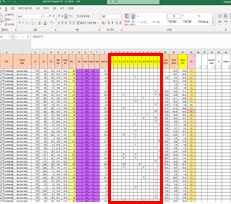
Before this project, line stop recording depended on manual whiteboard notes every hour and end-of-shift Excel summaries prepared by line leaders. This workflow created major blind spots: micro-stoppages lasting only a few seconds were often missed, stop categories were inconsistently recorded across shifts, and investigation data was usually available only after production had already ended. As a result, MES reports were frequently inaccurate, root-cause analysis was delayed, and maintenance teams had no real-time visibility into recurring downtime patterns.
projectDetail.theSolution
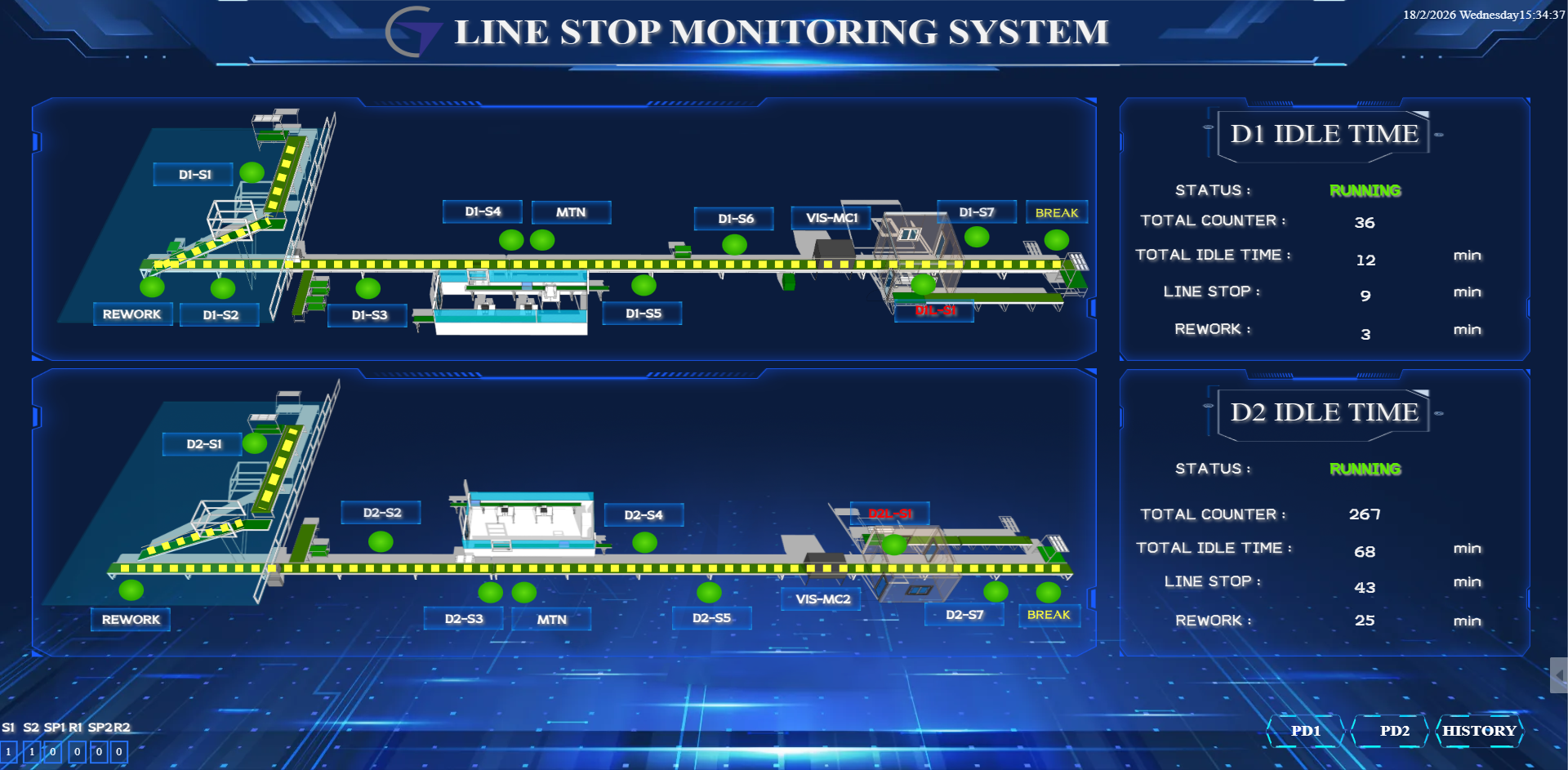
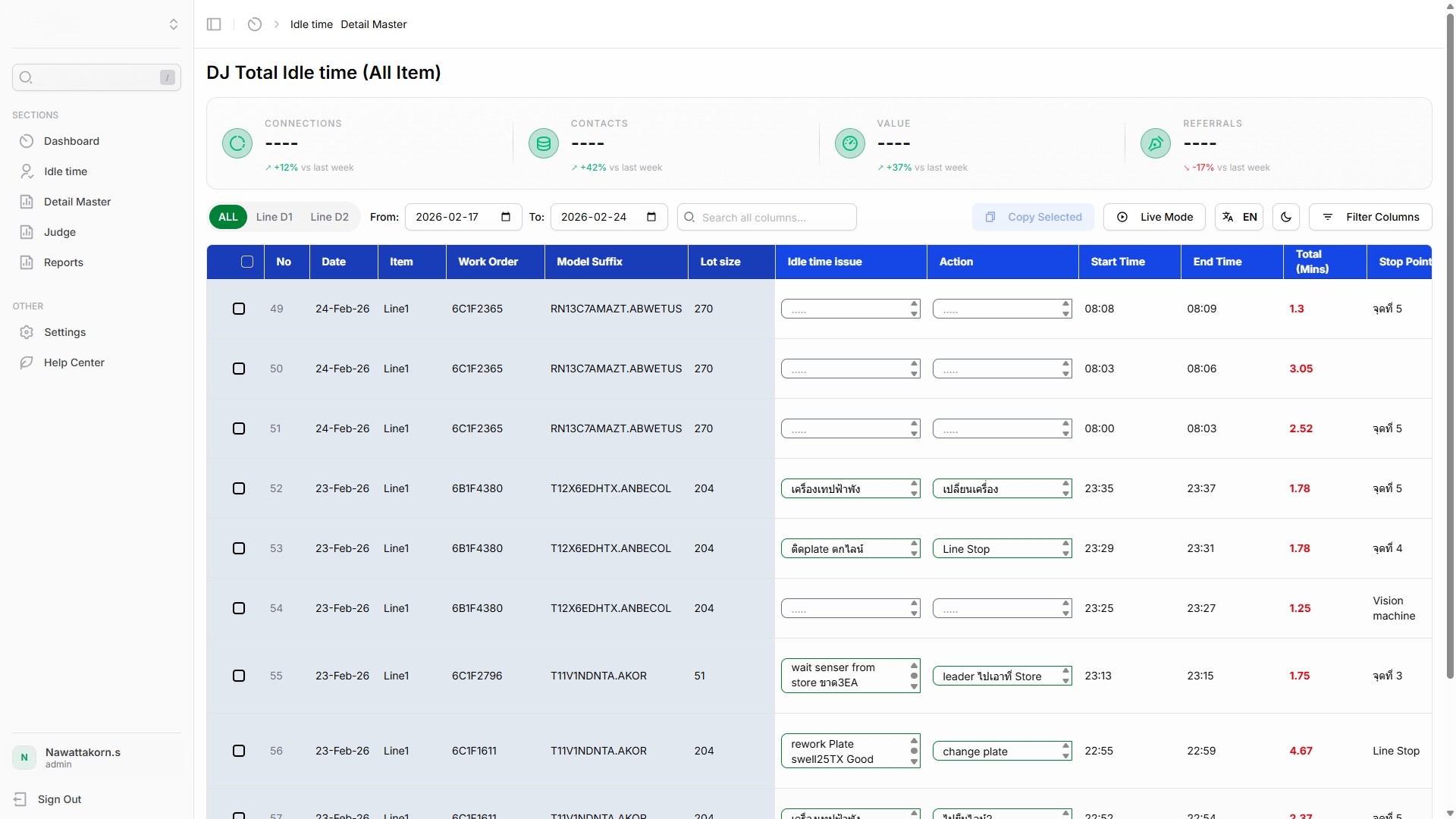
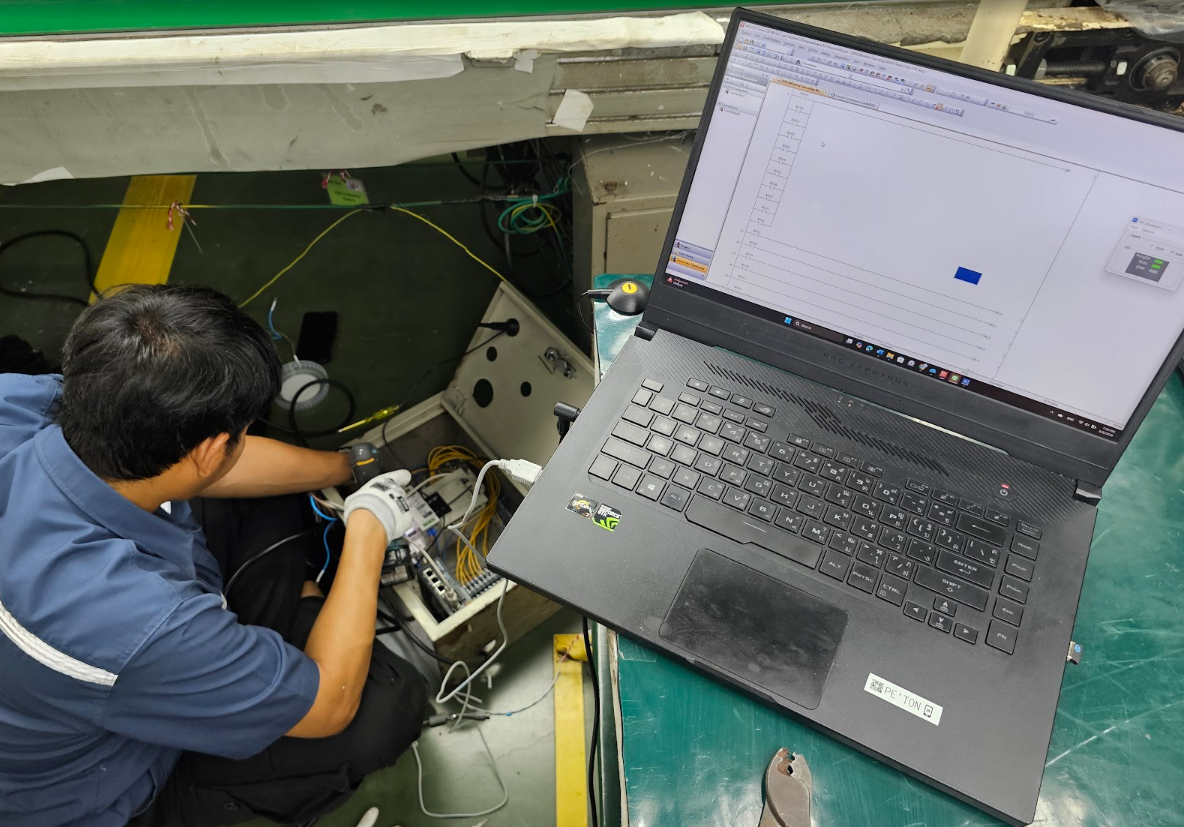
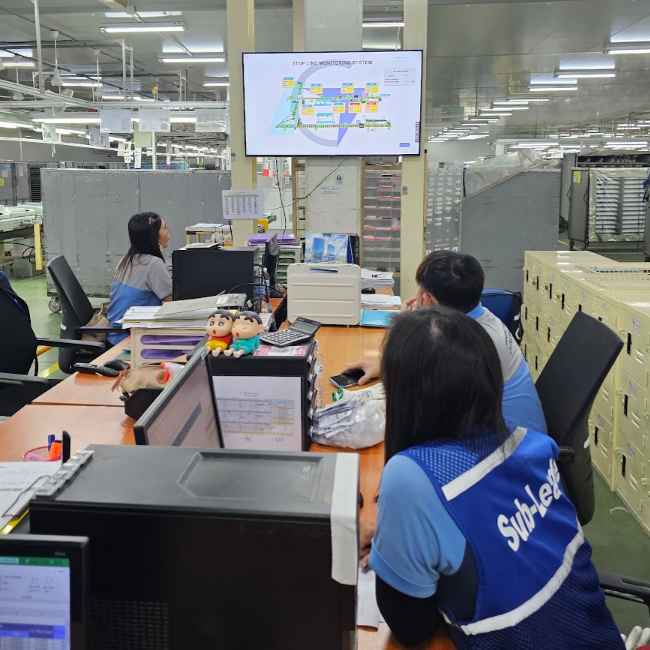
I developed a real-time Line Stop Monitoring System accessible from web and mobile devices. Mitsubishi PLC machine-state signals are collected through a V-Box IoT gateway and streamed into PostgreSQL with timestamp-level precision. The dashboard provides live line status, stop duration, stop frequency, and process-level loss visibility, while automated data aggregation replaces manual Excel consolidation. This architecture eliminates human logging errors and gives production, maintenance, and management teams a single real-time source of truth for downtime performance.
projectDetail.transformationEvidence
projectDetail.systemDemo
projectDetail.systemArchitecture
PLC
IoT Gateway
Database
Dashboard
projectDetail.lessonsLearned
projectDetail.businessImpact
projects.detailHeading
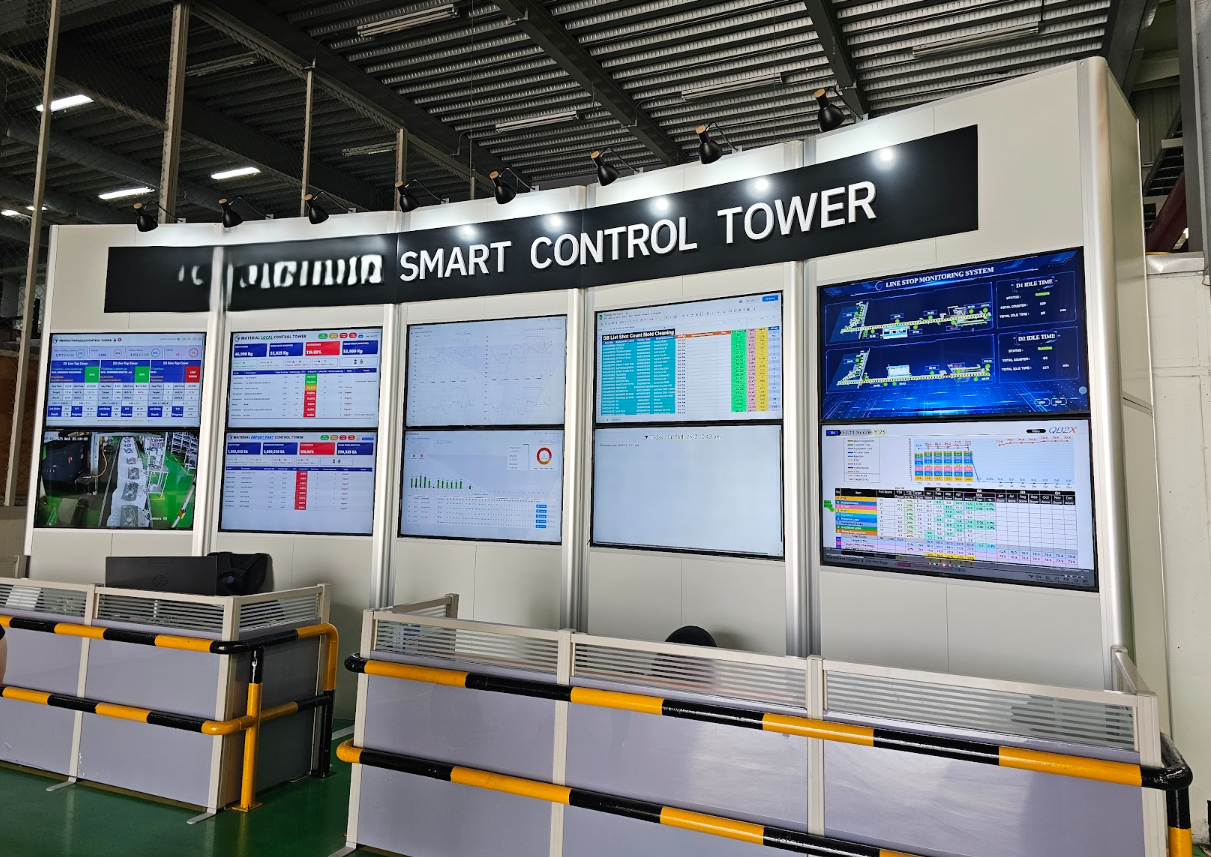
This project transformed a manual, paper-based top cover assembly line into a real-time digital operation with actionable downtime intelligence. Project Scope: - Replaced hourly whiteboard tracking and end-of-shift Excel consolidation with automatic data capture. - Connected Mitsubishi PLC stop/run signals to a centralized PostgreSQL database through a V-Box IoT gateway. - Delivered a responsive Next.js dashboard for production leaders, maintenance teams, and management. System Architecture: 1. Machine Layer: Mitsubishi PLCs expose machine run/stop states and momentary stop events from production equipment. 2. Edge Gateway: V-Box continuously reads PLC memory and securely forwards event data to the central backend. 3. Database Layer: PostgreSQL stores time-series stop events, durations, and categorized reason codes for historical analysis. 4. Application Layer: Next.js dashboard presents live status, trend summaries, and shift-based stop analytics on web/mobile. Key Features: - Second-Level Tracking: Captures and aggregates loss time down to the second, including short micro-stoppages that manual logs missed. - Live Andon Visibility: Displays current line state, active stop duration, and process bottlenecks in real time. - Stop Reason Analytics: Supports categorized downtime analysis for faster root-cause discussion in D1/D2 meetings. - Automated Reporting: Eliminates manual end-of-shift Excel preparation with system-generated summaries. - Cross-Platform Access: Enables supervisors and engineers to monitor line health from both PC and mobile. Business Impact: - Improved data credibility for MES and management review by removing manual entry errors. - Reduced reporting workload for line leaders and enabled faster maintenance response cycles. - Shifted problem-solving from reactive end-of-day review to real-time operational control.
projects.technologies
- Mitsubishi PLC
- V-Box
- Next.js
- PostgreSQL
- Mobile Responsive
projects.systemGallery
projectDetail.nextProject
AI Vision Inspection & Monitoring System
AI Vision IV4 • Next.js • React